
It's out!
Luke Burgis's first book made big waves. This one will create a tsunami.

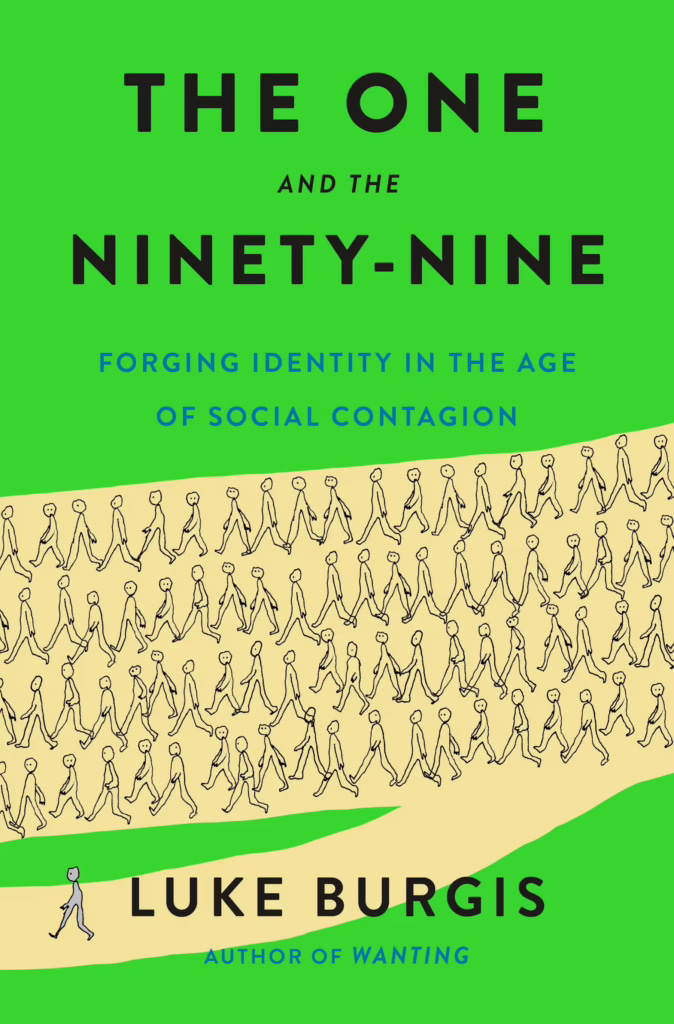
Today celebrates the release of Luke Burgis’s masterwork The One and the Ninety-Nine: Forging Identity in the Age of Social Contagion. with St. Martin’s Press. Given the number of Amazon reviews, it’s already a stunning success.
My morning was spent online, at a zoom celebration of the release as a dozen-or-so of us gathered to discuss the book on Zoom. Today’s release of book follows the astonishing success of his 2025 Wanting: The Power of Mimetic Desire in Everyday Life.
Leading economist Tyler Cowen, author of The Complacent Class led the praise: “”Social contagion is the most important phenomenon of our time. The One and the Ninety-Nine is the place to go to learn about it.” And so we will.
My copy of the book hasn’t arrived, so I’m relying on Luke Burgis’s recent discussion of Judas on his Substack to whet our appetite. Here’s Luke’s discussion of “Political Judas.”
Like everything Luke Burgis writes, it’s well worth your time. And I’ll be writing more about it in days to come.

French theorist René Girard‘s original use of the term “political atheist” came in his first book, Deceit, Desire, and the Novel. In it, he referred to the French writer Stendhal as an “atheist in politics” (athée en politique). Stendhal’s spirit of political atheism is embodied in Julien Sorel, the protagonist of his novel The Red and the Black.15
Burgis writes:
When Julien learns that his former employer has switched parties, he smiles. Girard comments on this scene: “Julien savors the ‘conversion’… as a music lover who sees a melodramatic theme re-appear under a new orchestral disguise. Most men are taken by disguises. Stendhal places a smile on Julien’s lips so that his readers will not be deceived.”16 Julien, the political atheist, sees the political machinations of his day as the superficial games that they are; when Stendhal places a smile on his lips, he is hinting that Julien sees through the mimesis. He refuses to believe in any type of deeper meaning that others might attach to a turncoat.
To the naive, every conversion—whether political or religious—is genuine. The Stendhalian revelation was his pulling back of the veil on the real dynamics of superficial change through his characters.
Monsieur de Rênal’s “false” conversion, as well as Julien’s reaction to it, is reminiscent of the biblical Judas and the illusion of his outward signs and appearances. When witnessing a woman pouring perfumed oil to anoint Christ’s feet, Judas said the politically correct thing: “Why was this ointment not sold for three hundred denarii and given to the poor?”17 In the very next sentence, he is called a thief by the Gospel writer.
But Judas is more than a thief. He is also a cynic. He would later sell Christ for one-tenth the amount of those three hundred denarii that he suggested giving to the poor. The words that he speaks with his lips, and the signs he communicates with his actions (he kissed Christ as a “sign” of his friendship, which simultaneously signaled his betrayal) are but false signals of a false conversion—of an interior disposition that has, by this point in the story, become that of the Machiavellian political atheist. Like Julien Sorel in Stendhal’s story, he does not hesitate to wrap himself in false appearances to accomplish his political aims.
“Judas, however, quickly migrates from the Machiavellian to the black-pilled. And this darker type of political atheist rejects not only religious belief and belief in politics, he also ceases to believe in his own ability to act within or upon political structures. Unlike the Machiavellian political atheist who finds a way to survive within the existing structures—maybe even exploit them—the black-pilled political atheist believes that current political systems are thoroughly corrupt and unsalvageable. He believes that the only thing reasonable for a self-respecting person to do is remove oneself from participating in such a system.”
Read the whole thing on Luke’s Substack here.
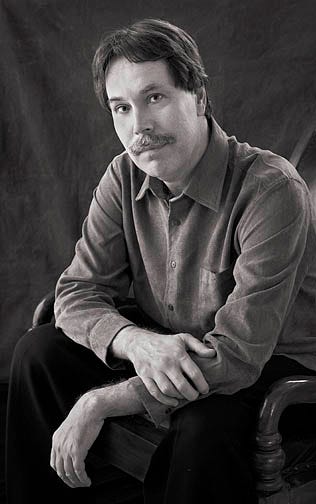
Meanwhile, Ted Gioia over at The Honest Broker (and pictured at right) is also having Girardian fever. He lists “Twelve Things I Learned from René Girard.” Here’s one observation: “”Girard devoted his life to exposing the lies behind fashions and trends. And now, after his death, he is fashionable and trendy. It’s almost like some kind of punishment.”
Read it here. An excerpt:
4. Imitation leads to blood feuds and reciprocal violence—escalating like Mafia wars—which are traditionally resolved by the sacrifice of a scapegoat.
In ancient times, an actual bloody sacrifice took place. In other situations, a ritualized sacrifice is served up. Today, it might be somebody blacklisted in Hollywood or canceled on social media. (Heroes often turn into scapegoats—see item #5 below).
To halt (temporarily) the blood feud, violent impulses of the combatants are targeted at the scapegoat, instead of at each other. (Here’s an example: After 9/11, Democrats and Republicans came to together and focused their hostility on non-existent weapons of mass destruction in Iraq, creating a short-lived lull in their political feuding.)
“Nine-tenths of politics,” Girard asserts, is “choosing the same scapegoat as everyone else.”
Read Ted’s whole catalog of mimeticism here.
Are we missing the most important part of the story?
Judas is analyzed here as a political actor. Jesus becomes a case study in social contagion, scapegoating, mimetic rivalry, and group dynamics. All fascinating and insightful but Christianity does not ultimately claim that Jesus came to reveal how societies work.
It claims that He came to save them. If Christ is reduced to an anthropological insight, a political symbol, or the ultimate victim of a scapegoat mechanism, then the central question remains unanswered:Why did He die?
The Gospel is not merely that Jesus exposed our violence. It is that He willingly entered into it, bore it, defeated sin and death, and rose again!